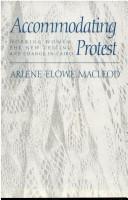
Accommodating protest
Arlene Elowe Macleod · 1992
איפה לקנות
בדקו את המחיר העדכני באמזון. אנחנו לא מציגים מחירים כי הם משתנים מדי יום.
לצפייה באמזוןקישור שותפים. בתור שותפים של Amazon אנחנו מרוויחים מרכישות מתאימות.
על הספר
The aftermath of the 1967 and 1973 wars with Israel created a propitious environment for a new movement, voluntarily initiated by women: it is the veiling movement. By the early 1980s it became an overwhelming fact of life, almost the norm on Cairo streets. According to Macleod, the veiling was spurred largely by Islamic groups in universities, but later gained considerable appeal and was adopted by a broader spectrum of women. This veiling has raised many questions as to its symbolism and implications: if the veil is a symbolic action, what exactly does it symbolize? Are women supporting a return to traditional patterns of in- equality by reviving this 'powerful symbol of women's subordination'? Macleod attempts to answer these questions by venturing into very thorny areas. She studies how class interacts with gender, and notes that the problems women face in Egypt are also problems of poverty and not purely of gender inequity. The Cairenne society is a society where people are acutely class conscious, and have a 'strong sense both of hierarchy and of their place in this social and economic ranking system'. It is also a society where, in the midst of modernization and commercialism which result in confusion as well as the loss of the sense of identity, there is an increased interest in praying, and in the return to God, in the hope of a better future. But the problem is that theological debates and interpretations are impregnated with state politics which consecrate women's inferior position in the hierarchy. -- Review from https://www.jstor.org (Sep. 8, 2016).
פרטי הספר
- שנה
- 1992
- שפה
- English
- הוצאה
- American University in Cairo Press
- מהדורות
- 1
- עמודים
- 206
- ISBN
- 9789774243073
מקור הנתונים: Wikidata