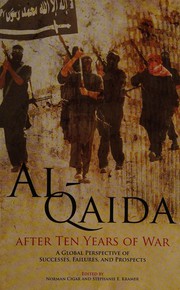
Al-Qaida after ten years of war
Norman L. Cigar, Stephanie E. Kramer · 2011
על הספר
Since the September 2001 attacks on the World Trade Center and the Pentagon, the United States has been at war with al-Qaida. Over the past 10 years, counterterrorism efforts have disrupted its main training facilities and eliminated much of the core leadership structure, including the mastermind Usama Bin Ladin. Despite this, al-Qaida has proved resilient. While the core leadership has been compromised, regional al-Qaida offshoots and affiliated Islamist terrorist groups have formed, developed, and become prominent in their own right. To aid in examining and explaining al-Qaida's trajectory, the Minerva Initiative at Marine Corps University hosted a conference in the spring of 2011, just days before Bin Ladin's demise. The panels at this conference addressed diverse issues such as al-Qaida's overarching strategy; the degree of control that central al-Qaida leadership maintains over regional franchises; and the strategies, tactics, successes, and failures in each theater of operation. The resulting papers contribute to the ongoing and ever-evolving net assessment of al-Qaida and its future prospects, and they help inform the crafting of a war termination phase with al-Qaida.
פרטי הספר
- שנה
- 2011
- שפה
- English
- הוצאה
- Marine Corps University Press
- מהדורות
- 1
- עמודים
- 207
- ISBN
- 9780160902994
מקור הנתונים: Wikidata