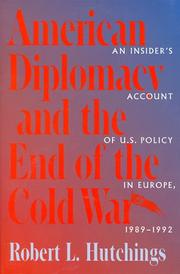
American diplomacy and the end of the Cold War
Robert L. Hutchings · 1997
על הספר
As director for European affairs at the National Security Council in 1989-92, Robert Hutchings was at the heart of U.S. policymaking toward Europe and the Soviet Union during the dizzyingly fast dissolution of the Soviet bloc. Hutchings adds a scholar's balanced judgment and historical perspective to his insider's view from the White House as he reconstructs how things looked to policymakers in the United States and in Europe, describes how and why decisions were made, and critically examines those decisions in the light of what can now be known. He assesses the critical support of U.S. diplomacy for the East European revolutions and the unification of Germany - offering fascinating character sketches along the way - and describes how U.S. relations with Moscow were managed up to the collapse of the USSR. Hutchings also discusses the difficulties in forging a post-cold war European order and U.S. failures in dealing with a disintegrating Yugoslavia.
המשפט הראשון: THE BUSH ADMINISTRATION entered office in January 1989 predisposed to major change-to "dream big dreams," as the president put it, and to think unconventionally.
פרטי הספר
- שנה
- 1997
- שפה
- English
- הוצאה
- The Johns Hopkins University Press
- מהדורות
- 1
- עמודים
- 488
- ISBN
- 9780801856211
מקור הנתונים: Wikidata