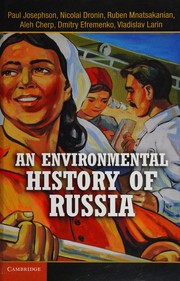
An environmental history of Russia
Paul R. Josephson · 2013
על הספר
The former Soviet empire spanned eleven time zones and contained half the world's forests; vast deposits of oil, gas, and coal; various ores; major rivers such as the Volga, Don, and Angara; and extensive biodiversity. These resources and animals, as well as the people who lived in the former Soviet Union - Slavs, Armenians, Georgians, Azeris, Kazakhs and Tajiks, indigenous Nenets and Chukchi - were threatened by environmental degradation and extensive pollution. This environmental history of the former Soviet Union explores the impact that state economic development programs had on the environment. The authors consider the impact of Bolshevik ideology on the establishment of an extensive system of nature preserves, the effect of Stalinist practices of industrialization and collectivization on nature, and the rise of public involvement under Khrushchev and Brezhnev, and changes to policies and practices with the rise of Gorbachev and the break-up of the USSR. Provides an environmental history of the former Soviet Union from 1900 to 2000 -- Covers a range of interactions between humans and various ecosystems from the arctic to deserts and from forests to rivers and lakes -- Explores the legacy of the Stalinist system of development through the twenty-first century. -- Publisher's website.
פרטי הספר
- שנה
- 2013
- שפה
- English
- סדרה
- Studies in environment and history
- הוצאה
- Cambridge University Press
- מהדורות
- 1
- עמודים
- 340
- ISBN
- 9780521869584
מקור הנתונים: Wikidata
עוד של Paul R. Josephson