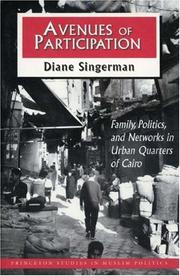
Avenues of participation
Diane Singerman · 1995
על הספר
Intentionally excluded from formal politics in authoritarian states by reigning elites, do the common people have concrete ways of achieving community objectives? Contrary to conventional wisdom, this book demonstrates that they do. Focusing on the political life of the shab (or popular classes) in Cairo, Diane Singerman shows how men and women develop creative and effective strategies to accomplish shared goals, despite the dominant forces ranged against them. Starting at the household level in one densely populated neighborhood of Cairo, Singerman examines communal patterns of allocation, distribution, and decisionmaking. Combining the institutional focus of political science with the sensitivities of anthropology she uncovers a system of informal networks that constitutes another layer of collective institutions within Egypt and allows excluded groups to pursue their interests. She documents the extensive presence of the informal economy and argues that these financial resources further enhance the informal and invisible organizational grid of the shab. Avenues of Participation traces this informal system from its grounding in the family to its influence on the larger polity.
המשפט הראשון: IN URBAN QUARTERS of Cairo, 'id-dallalaat (female peddlers) organize extensive networks of women who collect ration cards from neighbors and kin, bribe local employees of government food cooperatives, and endure raucous crowds outside cooperatives in densely populated areas in order to obtain a large volume of government-subsidized and distributed food.
פרטי הספר
- שנה
- 1995
- שפה
- English
- הוצאה
- Princeton University Press
- מהדורות
- 3
- עמודים
- 356
- ISBN
- 9780691025681
מקור הנתונים: Wikidata