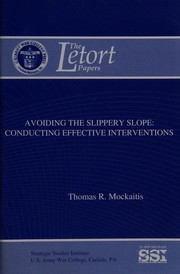
Avoiding the slippery slope
Thomas R. Mockaitis · 2013
איפה לקנות
בדקו את המחיר העדכני באמזון. אנחנו לא מציגים מחירים כי הם משתנים מדי יום.
לצפייה באמזוןקישור שותפים. בתור שותפים של Amazon אנחנו מרוויחים מרכישות מתאימות.
על הספר
This Letort Paper covers U.S. military interventions in civil conflicts since the end of the Cold War. It defines intervention as the use of military force to achieve a specific objective (i.e., deliver humanitarian aid, support revolutionaries or insurgents, protect a threatened population, etc.) and focuses on the phase of the intervention in which kinetic operations occurred. The analysis considers five conflicts in which the United States intervened: Somalia (1992-93), Haiti (1994), Bosnia (1995), Kosovo (1999), and Libya (2011). It also reviews two crises in which Washington might have intervened but chose not to: Rwanda (1994) and Syria (2011-12). The author examines each case using five broad analytical questions: 1. Could the intervention have achieved its objective at an acceptable cost in blood and treasure? 2. What policy considerations prompted the intervention? 3. How did the United States intervene? 4. Was the intervention followed by a Phase 4 stability operation? and, 5. Did Washington have a viable exit strategy? From analysis of these cases, the author derives lessons that may guide policy makers in deciding when, where, and how to intervene in the future.
פרטי הספר
- שנה
- 2013
- שפה
- English
- סדרה
- Letort papers
- הוצאה
- Strategic Studies Institute and U.S. Army War College Press
- מהדורות
- 1
- עמודים
- 86
- ISBN
- 9781584875727
מקור הנתונים: Wikidata
עוד של Thomas R. Mockaitis