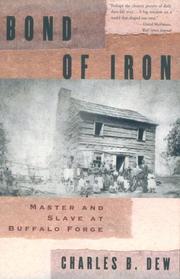
Bond of Iron
Charles B. Dew · 1995
על הספר
The records dealing with the Buffalo Forge slaves are unique in their completeness; never before have details of this life in the American South been so rich, so exacting, and so accessible to historian and general reader alike. Historian Charles Dew's exhaustive study of the Buffalo Forge asks - to use Charles Joyner's wonderful phrase - "large questions in small places"; he describes what working and living conditions were like for the slave artisans and their families, traces patterns of accommodation and resistance, and elucidates the complex interaction between white and black that constituted the inner core of the master-slave relationship. Buffalo Forge was an extensive ironmaking and farming enterprise located approximately nine miles southeast of Lexington in the Valley of Virginia. This property was developed in the antebellum period by two men: William Weaver, a Pennsylvania entrepreneur who made his initial investment at Buffalo Forge during the War of 1812, and Daniel C. E. Brady, another Pennsylvanian and a relative of Weaver's whom Weaver brought down to the valley during the 1850s to assist him in managing the Buffalo Forge operations. By the time of the Civil War, Weaver had amassed an extraordinary estate which included a force of seventy owned slaves plus an additional force of as many as one hundred slaves hired annually, whom he employed in both iron-manufacturing and agricultural tasks. During the antebellum years, he operated two charcoal-fired blast furnaces and two well-equipped forges for the production of bar iron, and held over 20,000 acres of land scattered across three counties in the Valley. Almost every job on the Buffalo Forge property, from the most highly skilled to the most ordinary, was performed by slave labor. The story of William Weaver's slaves is told through slave birth, illness, and death records kept assiduously by Weaver and later by Brady. The fortuitous survival of these documents is an invaluable addition to the history of slavery, allowing us a fully integrated, day-to-day look at the slave community's function and development. Weaver-Brady records describe the deadly progress of epidemics and crippling industrial accidents among their slave force; in noting all slave births, they permit the construction of detailed slave genealogies and reveal slave-naming practices. The Freedman's Bureau Marriage Register for the county in which Buffalo Forge was located also survives. This exceedingly valuable document r
פרטי הספר
- שנה
- 1995
- שפה
- English
- הוצאה
- W. W. Norton & Company
- מהדורות
- 2
- עמודים
- 448
- ISBN
- 9780393313598
מקור הנתונים: Wikidata
עוד של Charles B. Dew