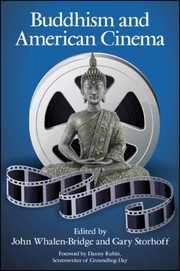
Buddhism and American cinema
John Whalen-Bridge, Gary Storhoff · 2014
על הספר
In 1989, the same year the Dalai Lama was awarded the Nobel Peace Prize, a decade-long boom of films dedicated to Buddhist people, history, and culture began. Offering the first scholarly treatment of Buddhism and cinema, the editors advise that there are two kinds of Buddhist film: those that are about Buddhists and those that are not. Focusing on contemporary American offerings, the contributors extend a two-pronged approach, discussing how Buddhism has been captured by directors and presenting Buddhist-oriented critiques of the worlds represented in films that would seem to have no connection with Buddhism. Films discussed range from those set in Tibet, such as Kundun and Lost Horizon, to those set well outside of any Buddhist milieu, such as Groundhog Day and The Matrix. The contributors explain the Buddhist theoretical concepts that emerge in these works, including karma, the bardo, and reincarnation, and consider them in relation to interpretive strategies that include feminism, postcolonialism, and contemplative psychological approaches.
פרטי הספר
- שנה
- 2014
- שפה
- English
- סדרה
- SUNY series in Buddhism and American culture
- הוצאה
- State University of New York Press
- מהדורות
- 1
- עמודים
- 257
- ISBN
- 9781438453491
מקור הנתונים: Wikidata
עוד של John Whalen-Bridge