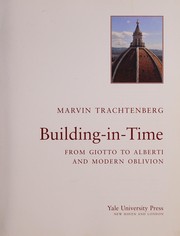
Building-in-time from Giotto to Alberti and modern oblivion
Marvin Trachtenberg · 2010
על הספר
In the pre-modern age in Europe, the architect built not merely with imagination, bricks and mortar, but with time, using vast quantities of duration as the means to erect monumental buildings that otherwise would have been impossible to achieve. Virtually all the great cathedrals of France and the rest of Europe were built by this deliberate practice, here given the name "Building-in-Time". It places an entirely new light on the major works of pre-modern Italy, from the Pisa cathedral group to the cathedrals of Milan, Venice and Siena, and from the monuments of fourteenth-century Florence to the new St Peter's. Even as this temporal regime was flourishing, the fifteenth-century Italian architect Leon Battista Alberti proposed a new one for architecture, in which time would ideally be excluded from the making of architecture ("Building-outside-Time"). Planning and building, which had always formed one fluid, imbricated process, were to be sharply divided, and the change that always came with time was to be excluded from architectural making.
פרטי הספר
- שנה
- 2010
- שפה
- English
- הוצאה
- Yale University Press
- מהדורות
- 1
- עמודים
- 490
- ISBN
- 9780300165920
מקור הנתונים: Wikidata
עוד של Marvin Trachtenberg