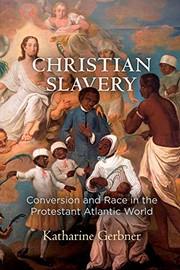
Christian Slavery
Katharine Gerbner · 2019
איפה לקנות
המחיר באמזון משתנה מדי יום, אז הכי נכון לראות אותו שם ברגע הקנייה.
לצפייה באמזוןזה קישור שותפים: כשקונים דרכו, האתר מקבל עמלה קטנה בלי תוספת במחיר עבורכם, וזה עוזר לנו להביא תוכן איכותי ולתחזק את האתר. בתור שותפים של Amazon אנחנו מרוויחים מרכישות מתאימות.
על הספר
Could slaves become Christian? If so, did their conversion lead to freedom? If not, then how could perpetual enslavement be justified? When Protestant missionaries arrived in the plantation colonies intending to convert enslaved Africans to Christianity in the 1670s, they were appalled that most slave owners rejected the prospect of slave conversion. Slaveholders regularly attacked missionaries, both verbally and physically, and blamed the evangelizing newcomers for slave rebellions. In response, Quaker, Anglican, and Moravian missionaries articulated a vision of "Christian Slavery," arguing that Christianity would make slaves hardworking and loyal. Christian Slavery shows how the contentions between slave owners, enslaved people, and missionaries transformed the practice of Protestantism and the language of race in the early modern Atlantic world. - Back cover. The author contends that religion was fundamental to the development of both slavery and race in the Protestant Atlantic world. Slave owners in the Caribbean and elsewhere established governments and legal codes based on an ideology of "Protestant Supremacy," which excluded the majority of enslaved men and women from Christian communities. For slaveholders, Christianity was a sign of freedom, and most believed that slaves should not be eligible for conversion. - Publisher.
פרטי הספר
- שנה
- 2019
- שפה
- English
- סדרה
- Early American studies
- הוצאה
- University of Pennsylvania Press
- מהדורות
- 4
- עמודים
- 296
- ISBN
- 9780812224368
מקור הנתונים: Wikidata