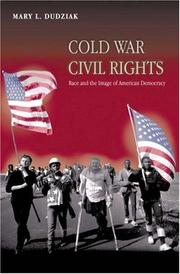
Cold War Civil Rights
Mary L. Dudziak, Mary L. Dudziak · 2000
על הספר
"In what may be the best analysis of how international relations affected any domestic issue, Mary Dudziak interprets postwar civil rights as a Cold War feature. She argues that the Cold War helped facilitate key social reforms, including desegregation. Civil rights activists gained tremendous advantage as the government sought to polish its international image. But improving the nation's reputation did not always require real change. This focus on image rather than substance - combined with constraints on McCarthy-era political activism and the triumph of law-and-order rhetoric - limited the nature and extent of progress.". "Archival information, much of it newly available, supports Dudziak's argument that civil rights was Cold War policy. But the story is also one of people: an African-American veteran of World War II lynched in Georgia; an attorney general flooded by civil rights petitions from abroad; the teenagers who desegregated Little Rock's Central High; African diplomats denied restaurant service; black artists living in Europe and supporting the civil rights movement from overseas; conservative politicians viewing desegregation as a communist plot; and civil rights leaders who saw their struggle eclipsed by Vietnam."--BOOK JACKET.
המשפט הראשון: One shot could have killed George Dorsey, but when he and three companions were found along the banks of the Appalachee River in Georgia on July 25, 1946, their bodies were riddled with at least sixty bullets.
פרטי הספר
- שנה
- 2000
- שפה
- English
- הוצאה
- Princeton University Press
- מהדורות
- 7
- עמודים
- 360
- ISBN
- 9780691152431
מקור הנתונים: Wikidata