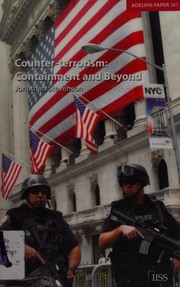
Counter-terrorism
Jonathan Stevenson · 2004
איפה לקנות
בדקו את המחיר העדכני באמזון. אנחנו לא מציגים מחירים כי הם משתנים מדי יום.
לצפייה באמזוןקישור שותפים. בתור שותפים של Amazon אנחנו מרוויחים מרכישות מתאימות.
על הספר
The 9/11 attacks revealed that the transnational terrorist threat facing the US and its partners was far more dangerous than most had previously discerned. It was now clear that al-Qaeda intended to, and could threaten the West's - particularly the US' - political and military leverage, with the aim of shifting the balance of power from the West to Islam after a violent global confrontation. In that sense, the new terrorist threat is strategic, and it has led to a worldwide mobilisation comparable to that required by a world war.This Paper argues that prevailing in the war' on terror, much like victory in the Cold War, entails containment, deterrence, outperformance and engagement. Military power is secondary to intelligence, law enforcement, enlightened social policy and diplomacy. Diplomatic engagement with the larger Muslim world is paramount as a means of denying al-Qaeda not merely recruits but theclash of civilisations' it seeks. The US-led intervention in Iraq, though intended to introduce democratic reform in the wider Middle East, has so far antagonised Islam and strengthened Islamist terrorism. This suggests that coercive or aggressively ideological diplomacy is unlikely to win over an Islamic population biased by anti-Western propaganda. Successful Western diplomacy will have to be discreet, nuanced and incremental.
פרטי הספר
- שנה
- 2004
- שפה
- English
- סדרה
- Adelphi paper -- 367
- הוצאה
- Routledge, Taylor & Francis Group
- מהדורות
- 1
- עמודים
- 130
- ISBN
- 9781315000848
מקור הנתונים: Wikidata
עוד של Jonathan Stevenson