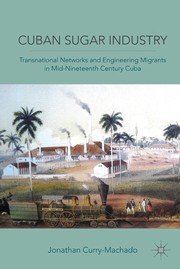
Cuban sugar industry
Jonathan Curry-Machado · 2011
על הספר
"In 1844, a number of migrant engineers were arrested in Cuba accused of sedition. Such engineering migrants contributed to Cuba becoming the world's foremost sugar producer, and this book explores the previously untold role they played, and seeks an understanding of the interaction between the transnational networks and local social dynamics within which Cuba was developing. As Cuba became prey to economic dependency, the migrant engineers became privileged scapegoats, their identity defined by their otherness. Based upon archival research, combining a macro- with a micro-historical approach, this book should be of interest not only to scholars of Cuban history, but also those whose concerns may include the engagement of migrants with a host society, historical processes of globalization related to commodities such as sugar, and the social dynamics for technological development"-- "Nineteenth-century Cuba led the world in sugar manufacture and technological innovation was central to this. Along with steam-powered machinery came migrant engineers, indispensable aliens who were well rewarded for their efforts. But they remained perennial outsiders, symbolic of Cuba's growing economic dependency, privileged scapegoats unconsciously caught up in the island's political insecurities. This book tells the story of a group of forgotten migrant workers who anonymously contributed to Cuba's development and whose experience helps illuminate both the advance of the Cuban sugar industry and the processes by which the island was bound into global commodity-driven networks of control, dependency, and resistance"--
פרטי הספר
- שנה
- 2011
- שפה
- English
- הוצאה
- Palgrave Macmillan
- מהדורות
- 3
- עמודים
- 264
- ISBN
- 9780230111394
מקור הנתונים: Wikidata