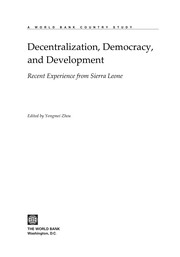
Decentralization, democracy, and development
World Bank · 2009
איפה לקנות
בדקו את המחיר העדכני באמזון. אנחנו לא מציגים מחירים כי הם משתנים מדי יום.
לצפייה באמזוןקישור שותפים. בתור שותפים של Amazon אנחנו מרוויחים מרכישות מתאימות.
על הספר
This publication addresses the question of whether political, fiscal, and administrative decentralization improves government effectiveness and the debate on whether it is a viable and desirable state-building strategy for post-conflict countries. The publication is a collection of eight papers written by authors who were closely involved in the decentralization reform process in Sierra Leone from 2003-07. During this period, Sierra Leone's government established elected district and urban councils across the country, transferred certain responsibilities for primary services and local investment and some financial resources to the new councils, and invested heavily in building the administrative infrastructure and capacity of the local councils. Compared to most other Sub-Saharan African countries that have embarked upon decentralization, Sierra Leone's progress in building local government capacity and restructuring the fiscal system is enviable. The authors conclude that improved security and public services are possible in a decentralizing country and Sierra Leone's progress would not have been possible without significant effort at fiscal decentralization and intensive investment in local government capacity building. The most critical ingredient for this reform process is the leadership team in charge of promoting the new institutional framework and their persistent effort to achieve quick improvement in the local government system and public services.--Publisher's description.
פרטי הספר
- שנה
- 2009
- שפה
- English
- סדרה
- A World Bank country study
- הוצאה
- World Bank
- מהדורות
- 1
- עמודים
- 150
- ISBN
- 9780821379998
מקור הנתונים: Wikidata
עוד של World Bank