Dibujar la nación
Nancy P. Appelbaum · 2017
על הספר
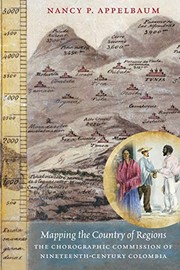
The 19th century was an era of ambitious geographic expeditions in the Americas. The Colombian Corographic Commission, which began in 1850 and lasted almost ten years, was one of the most influential in Latin America. Its objective was to delimit and map the young nation and its natural resources with the idea of ??contributing to its modernization. In this story of the Corographic Commission, Nancy P. Appelbaum concentrates on fieldwork practices and visual production of geographers as they traversed mountains, plains and forests in more than thirty provinces in order to define the territorial and racial composition of the country. Their assumptions and their methods contributed to molding a national imaginary that has remained to this day. The collection of reports, maps, sketches and drawings of the Commission shows a great tension between the marked differences observed by geographers in their field work and the ideas of homogenization to which they aspired. Those who participated in the Commission and its sponsors believed that a prosperous republic required a unified and homogenous population, but, paradoxically, its maps and paintings emphasized the diversity of the country and helped to create a "country of regions."
פרטי הספר
- שנה
- 2017
- שפה
- Spanish
- סדרה
- Tandem coediciones
- הוצאה
- Ediciones Uniandes
- מהדורות
- 1
- עמודים
- 318
- ISBN
- 9789587744958
מקור הנתונים: Wikidata