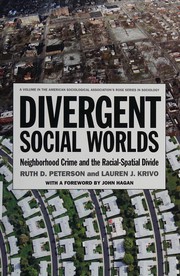
Divergent social worlds
Ruth D. Peterson · 2010
על הספר
More than half a century after the first Jim Crow laws were dismantled, the majority of urban neighborhoods in the United States remain segregated by race. The degree of social and economic advantage or disadvantage that each community experiences- particularly its crime rate- is most often a reflection of which group is in the majority. Based on the authors' groundbreaking National Neighborhood Crime Study (NNCS), this book provides a more complete picture of the social conditions underlying neighborhood crime patterns than has ever before been drawn. The study includes economic, social, and local investment data for nearly nine thousand neighborhoods in 87 cities, and the findings reveal a pattern across neighborhoods of racialized separation among unequal groups. Residential segregation reproduces existing privilege or disadvantage in neighborhoods, increasing the potential for crime and instability in impoverished non-white areas yet providing few opportunities for residents to improve conditions or leave. This book lays to rest the popular misconception that persistently high crime rates in impoverished, non-white neighborhoods are merely the result of individual pathologies, or worse, inherent group criminality. Separate, the book emphasizes, is inherently unequal. -- from Book Jacket.
פרטי הספר
- שנה
- 2010
- שפה
- English
- הוצאה
- Russell Sage Foundation
- מהדורות
- 3
- עמודים
- 157
- ISBN
- 9780871546937
מקור הנתונים: Wikidata