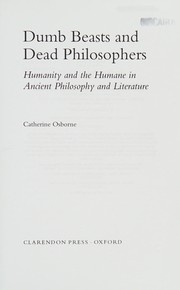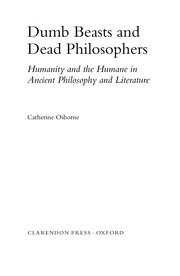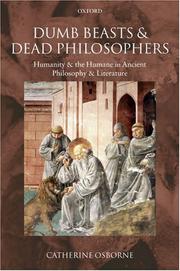
Dumb Beasts and Dead Philosophers
Catherine Osborne · 2007
איפה לקנות
המחיר באמזון משתנה מדי יום, אז הכי נכון לראות אותו שם ברגע הקנייה.
לצפייה באמזוןזה קישור שותפים: כשקונים דרכו, האתר מקבל עמלה קטנה בלי תוספת במחיר עבורכם, וזה עוזר לנו להביא תוכן איכותי ולתחזק את האתר. בתור שותפים של Amazon אנחנו מרוויחים מרכישות מתאימות.
על הספר
Animal rights do not feature explicitly in ancient thought. Indeed the notion of natural rights in general is not obviously present in the classical world. Plato and Aristotle are typically read as racist and elitist thinkers who barely recognise the humanity of their fellow humans. Surely they would be the last to show up as models of the humane view of other kinds? In this unusual philosophy book, Catherine Osborne asks the reader to think again. She shows that Plato's views on reincarnation and Aristotle's views on the souls of plants and animals reveal a continuous thread of life in which humans are not morally superior to beasts; Greek tragedy turns up thoughts that mirror the claims of rights activists when they speak for the voiceless; the Desert Fathers teach us to admire the natural perceptiveness of animals rather than the corrupt ways of urban man; the long tradition of arguments for vegetarianism in antiquity highlights how mankind's abuse of other animals is the more offensive the more it is for indulgent ends. What, then, is the humane attitude, and why is it better? How does the humane differ from the sentimental? Is there a truth about how we should treat animals? By reflecting on the work of the ancient poets and philosophers, Osborne argues, we can see when and how we lost touch with the natural intelligence of dumb animals.--Book jacket.
המשפט הראשון: This first puzzling quatrain which introduces William Blake's Auguries of Innocence is widely known.
פרטי הספר
- שנה
- 2007
- שפה
- English
- הוצאה
- Clarendon Press ; New York : Oxford University Press
- מהדורות
- 2
- עמודים
- 262
- ISBN
- 9780199282067
מקור הנתונים: Wikidata
עוד של Catherine Osborne