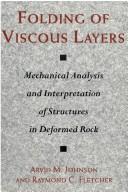
Folding of viscous layers
Arvid M. Johnson · 1994
על הספר
For years, structural geologists have sought a coherent methodology for understanding the forms of structures in the subsurface of the earth. Until recently, they have had to rely upon theories of geological folding involving simplistic drafting techniques and geometric principles. In Folding of Viscous Layers, Johnson and Fletcher provide a new approach to determining subsurface structure. What is the actual geometry of folds in the subsurface? How can we rationally extrapolate from an area where fold forms are known into areas where the folds are unknown? Johnson and Fletcher suggest combining geometric information with information about the folding mechanisms, boundary conditions, and physical properties of the section being folded. Inverse folding theory, in combination with observations and measurements, for the first time provides a rational method of predicting geological cross-sections of folded areas. The exposition of the fundamental tools of folding analysis allows the reader to move well beyond the examples presented in the book. A comprehensive appendix discusses basic topics necessary for a broad understanding of folding: derivation of the rheological equations for the viscous, the power law, and general nonlinear fluids; use of Fourier series; derivation and simplification of the Navier-Stokes equations; and the evolution of interfaces between fluids. Based on years of extensive research, Folding of Viscous Layers provides a new foundation for the study of structural geology and geomechanics. It will be of vital interest to structural geologists and geophysicists alike, both in academia and industry.
פרטי הספר
- שנה
- 1994
- שפה
- English
- הוצאה
- Columbia University Press
- מהדורות
- 1
- עמודים
- 461
- ISBN
- 9780231514019
מקור הנתונים: Wikidata