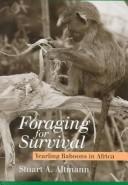
Foraging for survival
Stuart A. Altmann · 1998
איפה לקנות
בדקו את המחיר העדכני באמזון. אנחנו לא מציגים מחירים כי הם משתנים מדי יום.
לצפייה באמזוןקישור שותפים. בתור שותפים של Amazon אנחנו מרוויחים מרכישות מתאימות.
על הספר
In this book, Stuart A. Altmann presents the results of one of the most intensive investigations ever carried out on foraging behavior and its consequences for survival and reproduction. Basing his study on field observations of eleven yearling baboons, Altmann includes detailed data on what types of food and how much each baboon ate, as well as chemical analyses of these foods to identify differences in nutrient intake. He then statistically compares these actual data with ideal figures determined by a general model of optimal diets. Baboons have extraordinarily broad diets, even by primate standards. By one year of age they already consume more than two hundred different foods. Yet they are extremely selective about what part of each food they eat, and this keen selectivity adapts them to their savannah habitat. Perhaps the most striking result of Altmann's study is that the baboons' subsequent survival and reproductive success could be accurately predicted from what they had eaten as yearlings. Those that had energy intakes closest to the optimum and protein intakes farthest above their requirements were most likely to survive to adulthood and produce offspring that survived. The result of decades of research, Foraging for Survival will be an essential reference for primatologists, behavioral ecologists, mammalogists, and nutritionists.
המשפט הראשון: This is the story of how eleven wild baboon infants fed themselves-some successfully and some not-at the time of weaning, when for the first time in their lives they could no longer depend entirely upon their mother's milk for sustenance (fig. 1.1).
פרטי הספר
- שנה
- 1998
- שפה
- English
- הוצאה
- University Of Chicago Press
- מהדורות
- 1
- עמודים
- 617
- ISBN
- 9780226015965
מקור הנתונים: Wikidata