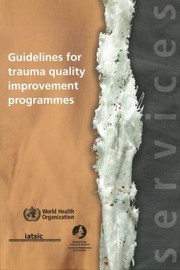
Guidelines for trauma quality improvement programmes
איפה לקנות
בדקו את המחיר העדכני באמזון. אנחנו לא מציגים מחירים כי הם משתנים מדי יום.
לצפייה באמזוןקישור שותפים. בתור שותפים של Amazon אנחנו מרוויחים מרכישות מתאימות.
על הספר
The goal of this publication is to give guidance on ways in which health care institutions globally can implement quality improvement (QI) programs oriented to strengthening care of the injured. This guidance is intended to be universally applicable to all countries, no matter what their economic level. They provide basic definitions and an overview of the field of QI, so that those not familiar with this field will have a working knowledge of it. Evidence of the benefit of QI in general and trauma QI in particular is then laid out. The main part of the publication reviews the most common methods of trauma QI, written in a how-to fashion. This covers a wide range of techniques. The first two of these are especially emphasized as ways in which to strengthen trauma QI in the setting of low-income and middle-income countries.--Publisher's description.
פרטי הספר
- שנה
- 2009
- שפה
- English
- הוצאה
- World Health Organization
- מהדורות
- 1
- עמודים
- 104
- ISBN
- 9789241597746
מקור הנתונים: Wikidata
עוד של World Health Organization (WHO)