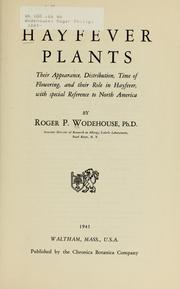
Hayfever plants
Roger P. Wodehouse · 2021
איפה לקנות
בדקו את המחיר העדכני באמזון. אנחנו לא מציגים מחירים כי הם משתנים מדי יום.
לצפייה באמזוןקישור שותפים. בתור שותפים של Amazon אנחנו מרוויחים מרכישות מתאימות.
על הספר
Preface: The study of hayfever falls into two fiels--the clinical and the botanical--each so broad of scope and widely differing in character that for one to excel in one is almost to preclude the possibility of excelling in the other. The past twenty-five years--approximately the time since pollen has been generally recognized as the cause of hayfever--has seen the accomplishment of much excellent work in both fields, but that of the former greatly exceeds that of the latter, and the facts of the latter field still remain scattered and so mingled with fancies that one who is not a trained botanist could scarcely be expected to separate them. This book is intended, therefore, to interpret the botanical facts of hayfever in terms of their clinical significance. Here are described all of the plants known to cause hayfever, most of those reasonably suspected of doing so, and many which have been mentioned in heayfever literature, possibly wrongly.^ In the plant descriptions I have not attempted to define the species beyond pointing out a few of the salient features which may readily be used and most easily retained in memory. The plants are presented in the sequence of Engler and Prantle in their "Natuliche Pflanzenfamilien". In the Choice of botanical names usage and expediency have been my guides. Nor have I attempted to settle the questions of priority, nor even to make the names conform either to the "International Rules of Botanical Nomenclature", or to the "American Code of Botanical Nomenclature". For the names of the grasses I have followed principally Hitchcock; for those of trees principally Sargent; for those of cultivated plants Bailey; and for those of the ragweeds and their relatives Rydberg. Otherwise I have given primary choice to names of current usage especially in hayfever literature, except where these have appeared to be definitely wrong or misleading.^ Where more than one name is commonly used those of secondary choice are added as synonyms. For the capitalization of specific names, since these are all Latin or at least Latinized in form, it seems that one has no choice but to follow the Latin rules for capitalization. Consequently names of people and names of genera which are used as nouns, are always capitalized, while names of countries and places which are used as adjectives are not. Hence the capitalizaiton in such names as Populus Sargentii, Cynodon Dactylon, but lack of capitalization in such as Artemisia canadensis. English names
פרטי הספר
- שנה
- 2021
- שפה
- English
- הוצאה
- Creative Media Partners, LLC
- מהדורות
- 6
- ISBN
- 9781015093171
מקור הנתונים: Wikidata