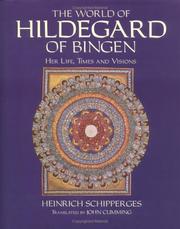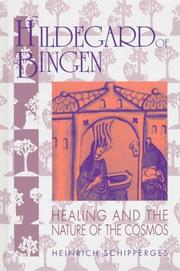
Hildegard of Bingen
Heinrich Schipperges · 1991
על הספר
Hildegard of Bingen's contemporaries called her "prophetissa teutonica," honoring her philosophical writings and interpretation of the cosmos. Medievalists still consider her one of the leading mystics, and point to her active spiritual and artistic life in the twelfth century as the finest example of what a woman can achieve. She was praised for her natural gifts, her prophetic charisma, and her dynamic reforming disposition. The abbess Hildegard of Bingen was the first composer to sign her musical works. As a playwright and author, she witnessed and shaped the time of the Crusades, the literary minnesang, and political and theological debate. The author draws a complex picture of her life and work, as he "translates" Hildegard's ideas and her mysterious world of symbols from medieval Latin into contemporary concepts.
המשפט הראשון: Often referred to yet barely known, Hildegard of Bingen is emerging as one of the greatest figures in the early history of the West-of a Europe in the ascendant-and as a still unexplored historical phenomenon that continually confronts us with new riddles.
פרטי הספר
- שנה
- 1991
- שפה
- English
- הוצאה
- M. Wiener Pub.
- מהדורות
- 3
- עמודים
- 122
- ISBN
- 9781558761377
מקור הנתונים: Wikidata
עוד של Heinrich Schipperges