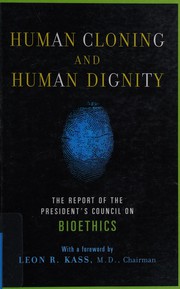
Human cloning and human dignity
איפה לקנות
בדקו את המחיר העדכני באמזון. אנחנו לא מציגים מחירים כי הם משתנים מדי יום.
לצפייה באמזוןקישור שותפים. בתור שותפים של Amazon אנחנו מרוויחים מרכישות מתאימות.
על הספר
Few avenues of scientific inquiry raise more thorny ethical questions than the cloning of human beings, a radical way to control our DNA. In August 2001, in conjunction with his decision to permit limited federal funding for stem-cell research, President George W. Bush created the President's Council on Bioethics to address the ethical ramifications of biomedical innovation. Over the past year the Council, whose members comprise a team of leading scientists, doctors, ethicists, lawyers, humanists, and theologians, has discussed and debated the pros and cons of cloning, whether in the service of producing children or as an aid to scientific research. The questions the Council members confronted do not have easy answers, and they did not seek to hide their differences behind an artificial consensus. Rather, the Council decided to allow each side to make its own best case, so that the American people can think about and debate these questions, which go to the heart of what it means to be a human being. Just as the dawn of the atomic age created ethical dilemmas for the United States, cloning presents us with similar quandaries that we are sure to wrestle with for decades to come.
פרטי הספר
- שנה
- 2003
- שפה
- English
- הוצאה
- National Bioethics Advisory Commission
- מהדורות
- 1
- עמודים
- 319
- ISBN
- 9780160676383
מקור הנתונים: Wikidata
עוד של President's Council on Bioethics (U.S.)