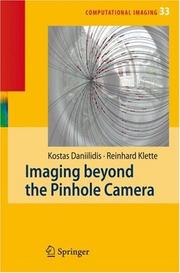
Imaging beyond the pinhole camera
Kostas Daniilidis, Reinhard Klette · 2007
איפה לקנות
המחיר באמזון משתנה מדי יום, אז הכי נכון לראות אותו שם ברגע הקנייה.
לצפייה באמזוןזה קישור שותפים: כשקונים דרכו, האתר מקבל עמלה קטנה בלי תוספת במחיר עבורכם, וזה עוזר לנו להביא תוכן איכותי ולתחזק את האתר. בתור שותפים של Amazon אנחנו מרוויחים מרכישות מתאימות.
על הספר
“ I hate cameras. They are so much more sure than I am about eve- thing.” John Steinbeck (1902 - 1968) The world’s ?rst photograph was taken by Joseph Nicephore Ni´ epce (1775–1833) in 1826 on his country estate near Chalon-sur-Saˆ one, France. The photo shows parts of farm buildings and some sky. Exposure time was eight hours. Ni´ epce used a pinhole camera, known as camera obscura, and utilized pewter plates as the support medium for the photographic process. The camera obscura, the basic projection model of pinhole cameras, was ?rst reported by the Chinese philosopher Mo-Ti (5th century BC): light rayspassingthroughapinholeintoadarkenedroomcreateanupside-down image of the outside world. Cameras used since Ni´ epce are basically following the pinhole camera principle. The quality of projected images improved due to progress in optical lenses and silver-based ?lm, the latter one replaced today by digital technologies.Pinhole-typecamerasarestillthedominatingbrands,andalso used in computer vision for understanding 3D scenes based on captured images or videos. However, di?erent applications have pushed for designing alternative architectures of cameras. For example, in photogrammetry cameras are installed in planes or satellites, and a continuous stream of image data can alsobecreatedbycapturingimagesjustlinebyline,onelineatatime.Asa ? secondexample,robotsrequiretocomprehendasceneinfull360 tobeable to react to obstacles or events; a camera looking upward into a parabolic or hyperbolic mirror allows this type of omnidirectional viewing. The dev- opment of alternative camera architectures also requires understanding - lated projective geometries for the purpose of camera calibration, binocular stereo, or static or dynamic scene comprehension.
פרטי הספר
- שנה
- 2007
- שפה
- English
- הוצאה
- Springer
- מהדורות
- 5
- עמודים
- 368
- ISBN
- 9781402048937
מקור הנתונים: Wikidata
עוד של Kostas Daniilidis