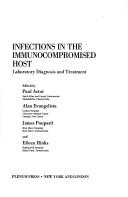
Infections in the Immunocompromised Host
Paul Actor · 1986
על הספר
The subject matter of this volume, the basis for which was a conference held in Philadelphia which focused on the subject of infections, including their diagnosis and treatment, in immunocompromised individuals. The material is of the rapid spread of acquired immunodeficiency syndrome (AIDS). The first section dealt with the general subject of the immunocompromised host. Here, reviewed in detail, were the epidemiological and clinical aspects of opportunistic infections in patients with defective immune responses. It is widely acknowledged that infections are a major complication of the neoplastic process. Cancer-bearing patients are more prone to certain kinds of infectious and cancer chemotherapy almost always increases susceptibility to such infections. Depending upon the basic disease process of the cancer, a specific array of infectious diseases can predicted. Patients altered in thymus-derived lymphocyte populations or mononuclear phagocyte capabilities resulting in defects in cell mediated immunity or delayed hypersensitivity become highly susceptible to certain groups of organisms, whereas, profoundly neutropenic patients usually become infected with different organisms. The types of infection noted are relatively predictable for the type of immune defect, with some variations according to epidemiological factors. Major advances have been made in the early diagnosis and treatment of infectious complications with increasing knowledge of their use. The application of so-called preventive procedures has had limited value to date, including immunotherapy, which appears to hold much promise. Covered also was the immunodulatory effects of microorganisms and their products. Infectious agents including bacteria, viruses, fungi and parasites can stimulate the nonspecific proliferation and activation of the immune system or specifically stimulate the antimicrobial immune response resulting in humoral antibody or specific sensitized cells. Various microorganisms and their products, especially those derived from mycobacteria, and other intracellular bacteria, can stimulate nonspecific responses and activate macrophages. The perturbation of the immune response observed during experimental and human infections is well-documented. For the most part, this is brought about by either generalized anergy or a selective derequlation of immune responses. Additionally, bacterial, viral and fungal functions. Parasites can alter the immune response by enchancing polyclonal
פרטי הספר
- שנה
- 1986
- שפה
- English
- הוצאה
- Springer
- מהדורות
- 3
- עמודים
- 220
- ISBN
- 9780306423666
מקור הנתונים: Wikidata