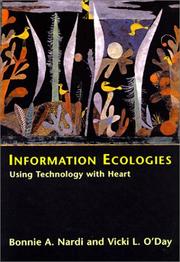
Information ecologies
Bonnie A. Nardi, Vicki O'Day · 1999
איפה לקנות
בדקו את המחיר העדכני באמזון. אנחנו לא מציגים מחירים כי הם משתנים מדי יום.
לצפייה באמזוןקישור שותפים. בתור שותפים של Amazon אנחנו מרוויחים מרכישות מתאימות.
על הספר
The common rhetoric about technology falls into two extreme categories: uncritical acceptance or blanket rejection. These two positions leave us with poor choices for action. They encourage us to accept as inevitable whatever technological changes come along. Claiming a middle ground, Bonnie Nardi and Vicki O'Day call for responsible, informed engagement with technology in local settings, which they call *information ecologies.* Their goal is to change the way people look at information technology. An information ecology is a system of people, practices, technologies, and values in a local environment. Like their biological counterparts, information ecologies are diverse, continually evolving, and complex. Nardi and O'Day encourage the reader to become more aware of the ways people and technology are interrelated. A key to thoughtful action, they say, is to ask more "know-why" questions, before jumping to the more straightforward "know-how" questions. They talk about practical ways to have more "know-why" conversations, to dig deeper and reflect more about how we use technology. Nardi and O'Day draw on their empirical research in offices, libraries, schools, and hospitals to show how people can engage their own values and commitments while using technology. These case studies show new and fruitful avenues for participation and engagement with technology. # Table of Contents ## *Part I: Information Ecologies: Concepts and Reflections* **1. Rotwang the Inventor** We look back at Fritz Lang's complex portrait of technology in his classic film *Metropolis*, from 1926. Lang illuminated tensions between head and heart in our human relationship to technology. **2. Framing Conversations about Technology** We discuss the rhetoric of inevitability in which we are constantly told that technical change is inevitable. We consider two faces of this rhetoric: the technophile version which tells us to be happy about the coming changes, and the dystopic view, which sees only doom and gloom. Neither extreme suggests that people who use technology can have a say in what should happen. **3. A Matter of Metaphor: Technology as Tool, Text, System, Ecology** Moving beyond the common rhetorical extremes, we engage more nuanced views, embodied in powerful metaphors: the commonsense but useful view of technology as tool, the subtle postmodern view of technology as text, and the scariest view--of technology as all encompassing system. Ecology is a metaphor too, and we turn to it in
פרטי הספר
- שנה
- 1999
- שפה
- English
- הוצאה
- MIT Press
- מהדורות
- 4
- עמודים
- 246
- ISBN
- 9780262324861
מקור הנתונים: Wikidata
עוד של Bonnie A. Nardi