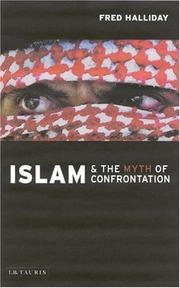
Islam and the myth of confrontation
Fred Halliday · 1996
על הספר
"Spiralling violence in the Middle East, the ever-present echoes of Jihadist extremism and President George Bush's identification of an 'axis of evil' have all raised the spectre of a future dominated by the conflict between 'Islam' and 'the West'. From theories such as Samuel Huntington's Clash of Civilizations to the anti-Western rhetoric of many Muslim militants themselves, this image of confrontation has come to be widely accepted. At the same time, the many issues afflicting the Middle East itself are widely seen as reflecting the influence of Islam on the politics and society of this region." "Fred Halliday sets out to reject these interpretations in this classic work, revised to encompass the crucially important events of recent months. Considering the sources of Islamic militancy and analyzing the confrontational rhetoric of both Islamic and anti-Muslim demagogues, he provides an alternative, critical but cautious, reassessment. The Middle East, he argues, can be treated neither as a distinct not as a unified region, but must be seen as a set of disparate societies, facing and reacting to the problems of economic development and political change."--Jacket.
המשפט הראשון: The chapters that follow are part of the long process of reflection on the contemporary Middle East and on the various ways of thinking about and analysing that region.
פרטי הספר
- שנה
- 1996
- שפה
- English
- הוצאה
- I. B. Tauris
- מהדורות
- 2
- עמודים
- 264
- ISBN
- 9781860648687
מקור הנתונים: Wikidata
עוד של Fred Halliday