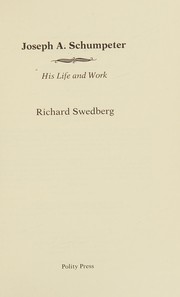
Joseph A. Schumpeter. Eine Biographie
Richard Swedberg · 1994
איפה לקנות
המחיר באמזון משתנה מדי יום, אז הכי נכון לראות אותו שם ברגע הקנייה.
לצפייה באמזוןזה קישור שותפים: כשקונים דרכו, האתר מקבל עמלה קטנה בלי תוספת במחיר עבורכם, וזה עוזר לנו להביא תוכן איכותי ולתחזק את האתר. בתור שותפים של Amazon אנחנו מרוויחים מרכישות מתאימות.
על הספר
""Early in life I had three ambitions," Joseph A. Schumpeter is said to have remarked. "I wanted to be the greatest economist in the world, the greatest horseman in Austria, and the best lover in Vienna. Well, I never became the greatest horseman in Austria." This colorful and enigmatic man did, however, become one of the truly great economists of this century. But his life was not without setbacks. Having written three important books before the age of thirty, he served as the Austrian Minister of Finance for only seven months before being ousted during the difficult period immediately after World War I, and during the 1920s he also failed in business. He spent the last two decades of his life as a popular and influential teacher at Harvard University. This major intellectual biography of Schumpeter follows his career from his immensely creative and productive youth in Austria-Hungary to the strange depressions that plagued him during his later years--especially during World War II, when he shocked his American colleagues with his violent outbursts against Roosevelt and U.S. policy toward Nazi Germany and Japan. Richard Swedberg skillfully blends narrative with a thoughtful and knowledgeable evaluation of Schumpeter's major contributions to economics, history, sociology, and political science.". "In recent years Schumpeter's emphasis on the unique role of the entrepreneur in modern economies has heightened public awareness of his theories, and his arguments are in many ways even more persuasive today than they were during his lifetime. His works are classic treatments not only of entrepreneurship but also of social change, dynamics within an economy, and sociological reasoning. The key to understanding Schumpeter's thinking, the biography argues, is to realize that he intended to create a broad-based science of economics, or Sozialokonomik. This new economics was to consist of four parts: economic theory, economic sociology, economic history, and statistics. Schumpeter's major works--especially Theory of Economic Development (1911), Capitalism, Socialism and Democracy (1942), and History of Economic Analysis (posthumously published in 1954)--all testify to this sweeping vision of economics. Swedberg lucidly explains this vision in a way that will fascinate not only economists and sociologists but also business people and other informed general readers."--BOOK JACKET.
המשפט הראשון: Many people assert, and indeed in some circles it has become axiomatic, that the fiscal problems left in the wake of the war cannot be solved within the framework of our prewar economic order.
פרטי הספר
- שנה
- 1994
- שפה
- English
- הוצאה
- Princeton University Press
- מהדורות
- 9
- עמודים
- 504
- ISBN
- 9780691222141
מקור הנתונים: Wikidata
עוד של Richard Swedberg