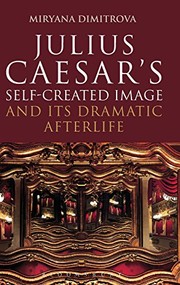
Julius Caesar's Self-Created Image and Its Dramatic Afterlife
Miryana Dimitrova · 2017
איפה לקנות
המחיר באמזון משתנה מדי יום, אז הכי נכון לראות אותו שם ברגע הקנייה.
לצפייה באמזוןזה קישור שותפים: כשקונים דרכו, האתר מקבל עמלה קטנה בלי תוספת במחיר עבורכם, וזה עוזר לנו להביא תוכן איכותי ולתחזק את האתר. בתור שותפים של Amazon אנחנו מרוויחים מרכישות מתאימות.
על הספר
"The book explores Julius Caesar's evolution from a historical personality to a dramatic character. Caesar's self-representation is seen to have a decisive impact on this process: in his Commentaries, Caesar constructs his image as a supreme commander characterised by exceptional celerity and ensuing omnipresence; he is also defined by the heightened sense of self-dramatization achieved by the self-referential use of the third person and the utilization of various dramaturgical techniques. These qualities create a portrait of a quasi-divine hero inhabiting a literary-historical reality. Channelled through Lucan's epic Bellum Civile and ancient historiography, these Caesarean qualities become integral to major dramatic texts, such as Shakespeare's Julius Caesar, George Chapman's The Tragedy of Caesar and Pompey, Handel's opera Giulio Cesare in Egitto and Bernard Shaw's Caesar and Cleopatra. Analysis of the plays, as well as examples of performance history and film adaptations contribute to the understanding of how these dramatic works reflect, highlight or contradict the aspects identified as intrinsic to Caesar's self-representation and, as a result, engage actively in the process of reception of Caesar's iconic and controversial personality."--Bloomsbury Publishing The book explores the extent to which aspects of Julius Caesar's self-representation in his commentaries, constituent themes and characterization have been appropriated or contested across the English dramatic canon from the late 1500s until the end of the 19th century. Caesar, in his own words, constructs his image as a supreme commander characterised by exceptional celerity and mercifulness; he is also defined by the heightened sense of self-dramatization achieved by the self-referential use of the third person and emerges as a quasi-divine hero inhabiting a literary-historical reality. Channelled through Lucan's epic Bellum Civile and ancient historiography, these Caesarean qualities reach drama and take the shape of ambivalent hubris, political role-playing, self-institutionalization, and an exceptional relationship with temporality. Focusing on major dramatic texts with rich performance history, such as Shakespeare's Julius Caesar, Handel's opera Giulio Cesare in Egitto and Bernard Shaw's Caesar and Cleopatra but also a number of lesser known early modern plays, the book encompasses different levels of drama's active engagement with the process of reception of Caesar's iconic and controver
פרטי הספר
- שנה
- 2017
- שפה
- English
- הוצאה
- Bloomsbury Academic
- מהדורות
- 4
- עמודים
- 256
- ISBN
- 9781474245753
מקור הנתונים: Wikidata