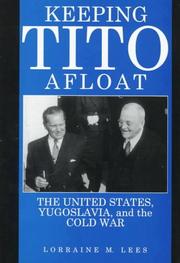
Keeping Tito Afloat
Lorraine M. Lees · 1993
איפה לקנות
המחיר באמזון משתנה מדי יום, אז הכי נכון לראות אותו שם ברגע הקנייה.
לצפייה באמזוןזה קישור שותפים: כשקונים דרכו, האתר מקבל עמלה קטנה בלי תוספת במחיר עבורכם, וזה עוזר לנו להביא תוכן איכותי ולתחזק את האתר. בתור שותפים של Amazon אנחנו מרוויחים מרכישות מתאימות.
על הספר
Keeping Tito Afloat draws upon newly declassified documents to show the critical role that Yugoslavia played in U.S. foreign policy with the communist world in the early years of the Cold War. After World War II, the United States considered Yugoslavia to be a loyal Soviet satellite, but Tito surprised the West in 1948 by breaking with Stalin. Seizing this opportunity, the Truman administration sought to "keep Tito afloat" by giving him military and economic aid. President Truman hoped that American involvement would encourage other satellites to follow Tito's example and further damage Soviet power. However, Lees demonstrates that it was President Eisenhower and Secretary of State John Foster Dulles who most actively tried to use Tito as a "wedge" to liberate the Eastern Europeans. By the end of 1958, Eisenhower and Dulles discontinued this "wedge strategy" because it raised too many questions about the ties that should exist between communist, noncommunist, and neutral states. As Tito shrewdly kept the United States at arm's length, Eisenhower was forced to accept Tito's continued absence from the Soviet orbit as victory enough. In the period between 1958 and 1960, Lees examines U.S. political objectives that remained after military support for Tito was discontinued. Although use of Yugoslavia as a wedge never fully succeeded, Lees shows how that strategy reflected the pragmatic and geopolitical policies of the Truman and Eisenhower administrations.
פרטי הספר
- שנה
- 1993
- שפה
- English
- הוצאה
- Pennsylvania State University Press
- מהדורות
- 1
- עמודים
- 268
- ISBN
- 9780271026503
מקור הנתונים: Wikidata