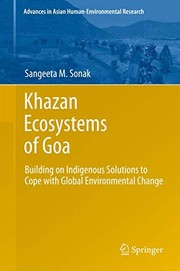
Khazan Ecosystems of Goa
Sangeeta M. Sonak · 2016
על הספר
This book elaborates on the Khazan ecosystems of Goa, India. Khazans are human-managed ecosystems, which are reclaimed from coastal wetlands, salt marshes and mangrove areas, where tidal influence is regulated through a highly structured system of dykes, canals, furrows, and sluice gates using resources that are amply available locally. Khazan ecosystems are marvels of tribal engineering. They are a simple architectural design, which operate at a very low running cost using tidal, hydro, and solar energy. The design contributes to a highly complex but eco-friendly ecosystem integrating agriculture, aquaculture and salt panning. . Khazan ecosystems have been functional for the last 3500 years. The history of Khazans is very ancient and can be traced to the transition from food gathering to food growing, which has been regarded as the biggest step in the history of human civilization. Khazan ecosystems thus have a high historical and world heritage value. They are also repositories of global biodiversity, with unique flora suitable to their unique and highly variable environment. They are endemic and heritage ecosystems of Goa and ultimately reservoirs of history and heritage. Using the example of the Khazan lands, the book analyzes and comments on traditional ecological knowledge and indigenous technology. It presents the evolution of Khazan management institutions over a period of more than three thousand years, as well as factors that have contributed to its decline in recent years. It develops a conceptual framework for ecosystem performance and suggests strategies for conservation of Khazans as well as strategies to build on these indigenous adaptation mechanisms to cope with the global environmental change.
פרטי הספר
- שנה
- 2016
- שפה
- English
- הוצאה
- Springer Netherlands
- מהדורות
- 3
- ISBN
- 9789402400762
מקור הנתונים: Wikidata