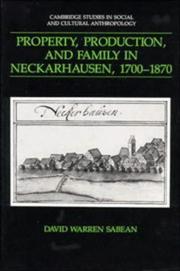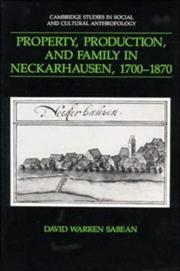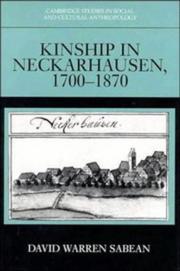
Kinship in Neckarhausen, 1700-1870
David Warren Sabean · 1997
על הספר
This work analyzes shifts in the relations of families, households, and individuals in a single German village during the transition to a modern social structure and cultural order. Sabean's findings call into question the idea that the more modern society became, the less kin mattered. Rather, the opposite happened. During "modernization," close kin developed a flexible set of exchanges, passing marriage partners, godparents, political favors, work contacts, and financial guarantees back and forth. In many families, generation after generation married cousins. Sabean also argues that the new kinship systems were fundamental for class formation, and he repositions women in the center of a political culture of alliance construction. Modern Europe became a kinship "hot" society during the modern era, only to see the modern alliance system break apart during the transition to the postmodern era.
המשפט הראשון: During the three decades it took to put this study together, visions of Casaubon danced in my head, while all about me scholarly interest in population studies and in kinship analysis was on a steep decline.
פרטי הספר
- שנה
- 1997
- שפה
- English
- הוצאה
- Cambridge University Press
- מהדורות
- 3
- עמודים
- 656
- ISBN
- 9780521586573
מקור הנתונים: Wikidata
עוד של David Warren Sabean