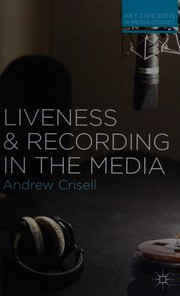
Liveness and recording in the media
Andrew Crisell · 2012
על הספר
Radio and television are often thought of and valued as live media. The great innovation and distinctive appeal of radio and television was its introduction of liveness into mass communication. So why does so much broadcast output consist of programmes that are pre-recorded and/or time-shifted - consumed by the audience after they have been transmitted? Andrew Crisell considers why, despite the value we place on liveness, we so often consume pre-recorded media. He also provides some unexpected answers about the meaning of 'liveness' and 'recording'; their significance, not only for television and radio but also for popular music, and the complexity of the relationship between liveness and recording. This engaging discussion includes diverse and well-known examples of broadcast output such as the1954 television adaptation of George Orwell's novel 1984, which was performed twice within a single week, Skyping on The Graham Norton Show and the television news coverage of the Bloody Sunday inquiry, and provides an in-depth case study of BBC One. Setting television and radio in the context of other media, it traces the history of liveness and recording, ascribing the rise of the serial to the relationship between the two.
פרטי הספר
- שנה
- 2012
- שפה
- English
- סדרה
- Key concerns in media studies
- הוצאה
- Palgrave Macmillan
- מהדורות
- 1
- עמודים
- 115
- ISBN
- 9780230282223
מקור הנתונים: Wikidata
עוד של Andrew Crisell