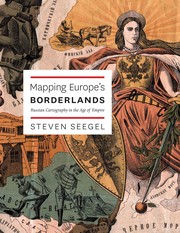
Mapping Europe's borderlands
Steven Seegel · 2012
איפה לקנות
המחיר באמזון משתנה מדי יום, אז הכי נכון לראות אותו שם ברגע הקנייה.
לצפייה באמזוןזה קישור שותפים: כשקונים דרכו, האתר מקבל עמלה קטנה בלי תוספת במחיר עבורכם, וזה עוזר לנו להביא תוכן איכותי ולתחזק את האתר. בתור שותפים של Amazon אנחנו מרוויחים מרכישות מתאימות.
על הספר
The simplest purpose of a map is a rational one: to educate, to solve a problem, to point someone in the right direction. Maps shape and communicate information, for the sake of improved orientation. But maps exist for states as well as individuals, and they need to be interpreted as expressions of power and knowledge, as Steven Seegel makes clear in his impressive and important new book. Mapping Europe’s Borderlands takes the familiar problems of state and nation building in eastern Europe and presents them through an entirely new prism, that of cartography and cartographers. Drawing from sources in eleven languages, including military, historical-pedagogical, and ethnographic maps, as well as geographic texts and related cartographic literature, Seegel explores the role of maps and mapmakers in the East Central European borderlands from the Enlightenment to the Treaty of Versailles. For example, Seegel explains how Russia used cartography in the aftermath of the Napoleonic Wars and, later, formed its geography society as a cover for gathering intelligence. He also explains the importance of maps to the formation of identities and institutions in Poland, Ukraine, and Lithuania, as well as in Russia. Seegel concludes with a consideration of the impact of cartographers’ regional and socioeconomic backgrounds, educations, families, career options, and available language choices.
פרטי הספר
- שנה
- 2012
- שפה
- English
- הוצאה
- The University of Chicago Press
- מהדורות
- 3
- עמודים
- 368
- ISBN
- 9780226744254
מקור הנתונים: Wikidata