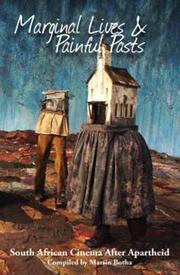
Marginal lives & painful pasts
Martin Botha · 2007
על הספר
In an important new book on South African cinema, Marginal lives and painful pasts: South African cinema after apartheid (Genugtig! Uitgewers), 14 contributors document and analyse contemporary film in terms of the political, social and cultural influence of apartheid. Together the fourteen chapters address three main topics: the transformed industry, film and marginalisation, film and documentation, and film and representation. In Post-apartheid cinema: policy, structures, themes and new aesthetics, Martin Botha contextualises recent developments in the film industry. Botha, well-known for his previous meticulous descriptions and analyses of South African film history, its artists and the industry, gives a brief history of filmmaking during the apartheid years. He shows how, despite some landmark films of directors such as Ross Devenish, Manie van Rensburg and Jans Rautenbach, the structures and mechanisms of the industry discouraged serious filmmaking. New structures such as the Arts and Culture Task Group (ACTAG) leading to the establishment of the National Film and Video Foundation (NFVF) was needed to provide a voice to marginalised communities and impetus for the development of a new film culture. Botha concludes that at present we have a cinema which dares to confront the past and the present and which dares to ask serious questions. With references to South Africa’s presence at international film festivals, international awards, investor confidence, government support (or at least a sympathetic attitude), and the NFVF’s work, we are now experiencing a revival in the film industry, leading Botha to predict a potentially bright future for the industry. In the second part of the book, the topic of marginalisation is addressed. Since the rise of feminism, feminist studies, racism studies and thereafter male and gay studies, a key topic in film studies is film’s potential to powerfully visualise (or ignore) and provide the outcast, the marginalised and the stereotyped with a voice. To illustrate this, and for the purpose of this book, Botha has chosen to focus the spotlight on gays as the marginalised group. The result is that for the first time in South African film-writing the representation of gays in South African film is dealt with seriously. Ricardo Peach’s chapter, Skeef Cinema Entja: A brief history of South African Queer cinematic cultures will probably go down as a masterpiece in the history of South Africa’s film writing. By “queering” South
פרטי הספר
- שנה
- 2007
- שפה
- English
- הוצאה
- Genugtig!
- מהדורות
- 1
- עמודים
- 386
- ISBN
- 9780958488099
מקור הנתונים: Wikidata