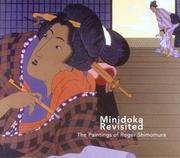
Minidoka Revisited
William W. Lew · 2005
על הספר
Sansei painter, printmaker, performance artist, teacher and collector Roger Shimomura is best known for works that fuse pop art, the appropriated traditions of Japanese ukiyo-e woodblock prints, comic book characters and other pop culture symbols to deliver barbed messages about stereotyping and racism in America. Incarcerated along with his family in the Puyallup Assembly Center, Washington, when he was two, and in the Minidoka concentration camp in south central Idaho from the ages of three to five, the camp experience informs much of his work. Shimomura began exploring the theme of the World War II concentration camps with his series Minidoka (1978–79), paintings focused on the colorful, flat style of ukiyo-e and pop art. Containing only subtle references to the concentration camp experience, Shimomura asserted that first and foremost an artist must be able to sell his work. He developed a style at once accessible and appealing, gradually adding cartoon icons and comic book characters to create works that were visually arresting and narratively ambiguous cultural mash-ups. Shimomura's adoption of ukiyo-e and pop art styles has drawn comparisons to his contemporary, artist Masami Teraoka. Appealing to a generation weaned on Mickey Mouse, Superman, Dick Tracy, and Bruce Lee movies, he inserted subtle and later more open challenges to the racist undertones that he encountered in America.
פרטי הספר
- שנה
- 2005
- שפה
- English
- הוצאה
- University of Washington Press
- מהדורות
- 1
- עמודים
- 128
- ISBN
- 9780295985831
מקור הנתונים: Wikidata