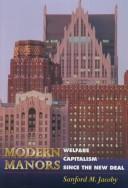
Modern manors
Sanford M. Jacoby · 1997
איפה לקנות
בדקו את המחיר העדכני באמזון. אנחנו לא מציגים מחירים כי הם משתנים מדי יום.
לצפייה באמזוןקישור שותפים. בתור שותפים של Amazon אנחנו מרוויחים מרכישות מתאימות.
על הספר
In light of recent trends of corporate downsizing and debates over corporate responsibility, Sanford Jacoby offers a timely, comprehensive history of twentieth-century welfare capitalism - the history of nonunion corporations that looked after the economic security of employees. Building on three fascinating case studies of "modern manors" - Eastman Kodak, Sears, and TRW - Jacoby argues that welfare capitalism did not expire during the Depression, as traditionally thought. Rather, it adapted to the challenges of the 1930s and became a powerful, though overlooked, factor in the history of the welfare state, the labor movement, and the corporation. Although employer paternalism has faltered in recent years, many Americans still look to corporations, rather than to unions or government, to meet their needs. Jacoby explains why there remains widespread support for the notion that corporations should be the keystone of economic security in American society and offers a perspective on recent business trends.
המשפט הראשון: AT THE BEGINNING of the twentieth century huge corporations dotted America.
פרטי הספר
- שנה
- 1997
- שפה
- English
- הוצאה
- Princeton University Press
- מהדורות
- 1
- עמודים
- 358
- ISBN
- 9780691007434
מקור הנתונים: Wikidata