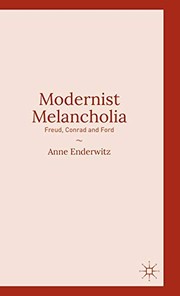
Modernist Melancholia
Anne Enderwitz · 2015
על הספר
Modernist melancholia explores modernism's melancholic roots through the detailed discussion of writings by Freud, Conrad and Ford. The three authors bridge the gap between the Victorian age and modernity: they are influenced by the evolutionary-archaeological model of thought, which shaped nineteenth-century culture, and they anticipate modern conceptions of self and language. In consequence, modernist melancholia is intimately linked to the nineteenth-century obsession with loss and continuity and, at the same time, constitutes a formative moment of twentieth-century modernism, subjectivity and theory. The monograph discusses historical melancholia and linguistic crisis in Conrad's "Heart of Darkness" (1899), Ford's "The Good Soldier" (1915) and their jointly published works "The Inheritors" (1901) and "Romance" (1903). Freud's ideas on melancholia provide the framework for the discussion, but instead of applying theory to literature, the book identifies in Freud's essays and works by Conrad and Ford similar ways of relating desire, history and a lack of meaning.
פרטי הספר
- שנה
- 2015
- שפה
- English
- הוצאה
- Palgrave Macmillan
- מהדורות
- 3
- עמודים
- 229
- ISBN
- 9781137444318
מקור הנתונים: Wikidata