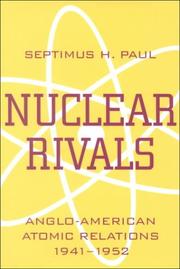
Nuclear Rivals
Septimus H. Paul · 2000
איפה לקנות
בדקו את המחיר העדכני באמזון. אנחנו לא מציגים מחירים כי הם משתנים מדי יום.
לצפייה באמזוןקישור שותפים. בתור שותפים של Amazon אנחנו מרוויחים מרכישות מתאימות.
על הספר
"Relying on recently declassified government records relating to postwar atomic research, Septimus H. Paul analyzes how the governments of the United States and Great Britain between 1939 and 1945 collaborated on developing the atomic bomb. Capitalizing on the availability of physicists and chemists who had fled Hitler's Germany, U.S. and British scientists were able to repeat within a few weeks the test of nuclear fission first performed by two German chemists and strive toward cooperative development of the bomb during World War II. But the death of Roosevelt and Truman's succession in 1945, coupled with Churchill's loss of the prime ministership to Clement Attlee, marked a definite change in Anglo-American atomic policy.". "After detonating the bomb, the United States became less willing to abide by the terms of wartime agreements pledging to continue postwar collaboration. Paul examines the postwar controversy surrounding noncollaboration and its effects on the British-American special relationship. He also shows how American unwillingness to collaborate forced the British to pursue an independent atomic program. On October 3, 1952, the British finally detonated their own atomic bomb."--BOOK JACKET.
פרטי הספר
- שנה
- 2000
- שפה
- English
- הוצאה
- Ohio State University Press
- מהדורות
- 1
- עמודים
- 272
- ISBN
- 9780814208526
מקור הנתונים: Wikidata