Political History of American Food Aid
Barry Riley · 2017
על הספר
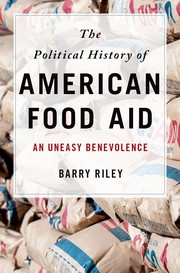
American food aid to foreigners long has been the most visible--and most popular--means of providing humanitarian aid to millions of hungry people confronted by war, terrorism and natural cataclysms and the resulting threat-often the reality-of famine and death. The book investigates the little-known, not-well-understood and often highly-contentious political processes which have converted American agricultural production into tools of U.S. government policy. In The Political History of American Food Aid, Barry Riley explores the influences of humanitarian, domestic agricultural policy, foreign policy, and national security goals that have created the uneasy relationship between benevolent instincts and the realpolitik of national interests. He traces how food aid has been used from the earliest days of the republic in widely differing circumstances: as a response to hunger, a weapon to confront the expansion of bolshevism after World War I and communism after World War II, a method for balancing disputes between Israel and Egypt, a channel for disposing of food surpluses, a signal of support to friendly governments, and a means for securing the votes of farming constituents or the political support of agriculture sector lobbyists, commodity traders, transporters and shippers. Riley's broad sweep provides a profound understanding of the complex factors influencing American food aid policy and a foundation for examining its historical relationship with relief, economic development, food security and its possible future in a world confronting the effects of global climate change. -- Provided by publisher.
פרטי הספר
- שנה
- 2017
- שפה
- English
- הוצאה
- Oxford University Press, Incorporated
- מהדורות
- 2
- עמודים
- 592
- ISBN
- 9780190228873
מקור הנתונים: Wikidata