Problem Solving For Tomorrow's World
Organisation for Economic Co-operation and Development · 2004
איפה לקנות
בדקו את המחיר העדכני באמזון. אנחנו לא מציגים מחירים כי הם משתנים מדי יום.
לצפייה באמזוןקישור שותפים. בתור שותפים של Amazon אנחנו מרוויחים מרכישות מתאימות.
על הספר
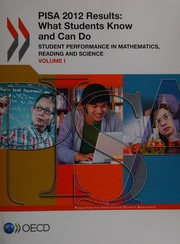
This book examines the results of the special portion of the 2003 PISA survey of student achievement that relates to problem-solving skills. Covering 40 countries (Australia; Austria; Belgium; Canada; Czech Republic; Denmark; Finland; France; Germany; Greece; Hungary; Iceland; Ireland; Italy; Japan; Republic of (South) Korea; Luxembourg; Mexico; Netherlands; New Zealand; Norway; Poland; Portugal; Slovak Republic; Spain; Sweden; Switzerland; Turkey; United Kingdom; United States; Brazil, Hong Kong-China, Indonesia, Latvia, Liechtenstein, Macao-China, Russian Federation, Serbia, Thailand, Tunisia, Uruguay), it provides, for the first time, a direct assessment of life competencies that apply across different areas of the school curriculum. The assessment looked at students abilities to identify problems in various settings, to choose relevant information or constraints, to represent possible alternatives or solution paths, to develop solution strategies, to solve the problem, and to communicate the solution. This report examines how countries can raise their performance in this competency area and what countries with lower performance levels can learn from those whose students do well. It also provides insights into some of the factors that are associated with the development of problem-solving skills and into how these factors interact and what the implications are for policy development. Finally, the report sheds light on countries that succeed in achieving high performance levels while at the same time providing an equitable distribution of learning opportunities.--Publisher description.
פרטי הספר
- שנה
- 2004
- שפה
- English
- הוצאה
- OECD
- מהדורות
- 2
- עמודים
- 159
- ISBN
- 9789264006423
מקור הנתונים: Wikidata
עוד של Organisation for Economic Co-operation and Development