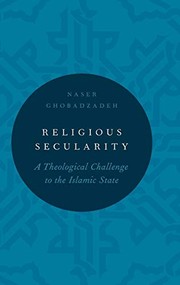
Religious Secularity
Naser Ghobadzadeh · 2014
איפה לקנות
בדקו את המחיר העדכני באמזון. אנחנו לא מציגים מחירים כי הם משתנים מדי יום.
לצפייה באמזוןקישור שותפים. בתור שותפים של Amazon אנחנו מרוויחים מרכישות מתאימות.
על הספר
"Fundamentalism" and "authoritarian secularism" are commonly perceived as the two mutually exclusive paradigms available to Muslim majority countries. Recent political developments, however, have challenged this perception. Formerly associated with a fundamentalist outlook, mainstream Islamist groups, such as the Muslim Brotherhood and Al-Nahda, have adopted a distinctly secular-democratic approach to the state re-building process. Their success or failure in transitioning to democracy remains to be seen, but the political position these Islamic groups have carved out suggests the viability of a third way. Naser Ghobadzadeh examines the case of Iran, which has a unique history with respect to the relationship of religion and politics. The country has been subject to both authoritarian secularization and authoritarian Islamization over the last nine decades. While politico-religious discourse in Iran is articulated in response to the Islamic state, it also bears the scars of Iran's history of authoritarian secularization-the legacy of the Pahlavi regime. Ghobadzadeh conceptualizes this politico-religious discourse as "religious secularity". He uses this apparent oxymoron to describe the Islamic quest for a democratic secular state, and he demonstrates how this concept encapsulates the complex characteristics of the Shiite religious reformation movement.
פרטי הספר
- שנה
- 2014
- שפה
- English
- הוצאה
- Oxford University Press
- מהדורות
- 4
- עמודים
- 288
- ISBN
- 9780199391172
מקור הנתונים: Wikidata