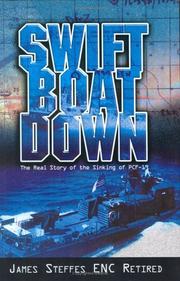
Swift Boat Down
James Steffes · 2005
איפה לקנות
בדקו את המחיר העדכני באמזון. אנחנו לא מציגים מחירים כי הם משתנים מדי יום.
לצפייה באמזוןקישור שותפים. בתור שותפים של Amazon אנחנו מרוויחים מרכישות מתאימות.
על הספר
Review Written by Bernie Weisz, Historian, Vietnam War May 9, 2011 Pembroke Pines, Florida, USA contact: [email protected] Title of Review: The Sinking of Swift Boat PCF-119. A Confused , Disorganized, Multi-Unit Screw-Up Resulting In Friendly Casualties. What is friendly fire? This is a military term which refers to the discharge of a weapon which results in death or injury among fellow soldiers or allies. Since the inception of warfare, friendly fire incidents have been a part it, however with the development of more sophisticated and deadly weapons it has made the problem increasingly rampant. In the Vietnam War, the definition of friendly fire excluded incidents in which members of the military deliberately fired on their allies, the South Koreans, Australians, New Zealanders, et al., as well as fellow soldiers. For firing on one's own troops a special term came about, called "Fragging." Fragging referred to the act of attacking a superior officer in one's chain of command with the intent to kill that officer. It was most commonly used to mean the assassination of an unpopular officer of one's own fighting unit. Killing was effected by means of a fragmentation grenade, hence the term. There were several factors that brought about friendly fire in Vietnam, such as the wild terrain and visibility during the monsoon season. When soldiers fought on land, sea, or air with which they were not familiar, or when being fired upon by enemy troops, the direction from which the shots were coming from were confusing, it can be explained why this may have occurred. With the addition of poor weather conditions, combat stress, when a soldier mistakenly believed that he was shooting at the enemy, and when a leader issued unclear or ambiguous orders, this was problematic when combined with conditions that prevented soldiers from using their own judgement. A prime example of this was the tragedy that occurred at Mi Lai on March 16, 1968. As Jim Steffes book will reveal, there were situations where it was difficult to determine whether a soldier or sailor was killed by friend or foe, and soldiers due to chagrin or fear of punishment have been known to conceal incidents of friendly fire. The American military provided extensive training to their soldiers to try and prevent the tragedy of friendly fire, which could have had a negative impact on troop morale, mission success, and public image as well as causing death or injury. The impact could be even more deleterious if dea
פרטי הספר
- שנה
- 2005
- שפה
- English
- הוצאה
- Xlibris Corporation
- מהדורות
- 6
- עמודים
- 164
- ISBN
- 9781599266121
מקור הנתונים: Wikidata