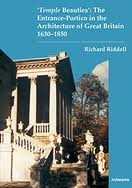
'Temple beauties'
Richard Riddell · 2011
על הספר
The portico is one of the most characteristic and significant features of western architecture and yet, perhaps, also one of the least closely observed. Redolent of Antiquity and comprising the essential vocabulary of classical architecture in the form of the orders – columns, entablatures and, usually, pediments – it evokes past glories and epitomizes the modular system of design that is central to that architecture. It has often played a key role in, or acted as a barometer of, stylistic innovations. Used widely in Antiquity, especially in temples, the portico suffered a decline following the dissolution of the Roman imperium in the West but sufficient literary and physical remains survived which, when viewed in particular ways and with the growth of archaeology , enabled it to regain a central position in architecture following the Renaissance. This study charts the portico's revival in Italy and elsewhere in Europe and defines the portico and its symbolism on a wide variety of building types notably churches, country houses, and civic and commercial architecture. It traces the portico's tentative introduction to Britain in the early seventeenth century, its rise based primarily on Roman models throughout the eighteenth century, its apogee in the Greek Revival in first half of the nineteenth century, and the beginning of its decline as a solecism towards the end of our period.
פרטי הספר
- שנה
- 2011
- שפה
- English
- הוצאה
- Archaeopress
- מהדורות
- 1
- עמודים
- 434
- ISBN
- 9781905739448
מקור הנתונים: Wikidata