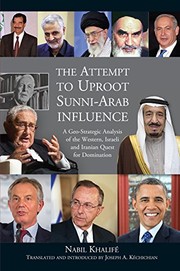
The Attempt to Uproot Sunni-Arab Influence
Nabil Khalife · 2017
על הספר
In the aftermath of popular uprisings that unleashed the quest for freedom, Arab governments scrambled to limit sectarian divisions, though much of these efforts came to naught. Regrettably, weak governments fell into carefully laid traps, aimed to divide and rule. Protracted wars further destroyed Arab wealth and cohesiveness, and Sunni communities saw their power bases marginalized. On cue, and predicted by some commentators, extremist movements like the so-called Islamic State emerged, targeting Sunnis with extreme violence. In 2014 Nabil Khalifé, an established Lebanese thinker, published a widely praised thesis that identified the root causes of renewed sectarian tensions at a time when confrontations polarized awakened Arab societies. Based on an extensive discussion of the 1979 Iranian Revolution that toppled the Shah, Khalifé advanced the notion that the revolution was not "Islamic" but an "Iranian-Shi'ah" rebellion that ended the Pahlavi military monarchy, and that the post-2011 Sunni-Shi'ah struggle was planned by leading Western powers, including Russia, to preserve Israel and impose the latter's acceptance in the Middle East as a natural element. In this translation of Istihdaf Ahl al-Sunna [Targeting Sunnis], Joseph A. Kéchichian analyses the fundamental questions raised by the author to better place the current sectarian collision in a geo-strategic global perspective. Based on the book's avowals of how the world's three monotheistic religions perceive each other and "Political Sunnism," Kéchichian assesses Henry Kissinger's famous appellation of the "Middle World" that houses significant and indispensable oil resources, and why that allegedly makes it - "Political Sunnism" - dangerous.
פרטי הספר
- שנה
- 2017
- שפה
- English
- הוצאה
- Sussex Academic Press
- מהדורות
- 3
- עמודים
- 264
- ISBN
- 9781845198534
מקור הנתונים: Wikidata