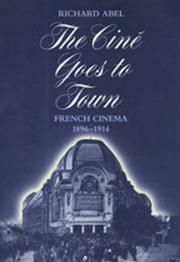
The Ciné Goes to Town
Richard Abel · 1994
על הספר
Richard Abel's magisterial new book radically rewrites the history of French cinema between 1896 and 1914, particularly during the years when Pathe-Freres, the first major corporation in the new industry, led the world in film production and distribution. Based on extensive investigation of rare films and documents preserved in archives throughout the world, and drawing on recent social and cultural histories on turn-of-the-century France and the United States, his book provides new insights into the earliest history of the cinema. Examining the output of filmmakers such as Lumiere and Melies and of the production companies Gaumont, Film d'art, and Eclair, The Cine Goes to Town combines industrial history with formal and stylistic analysis of the period's canonical films, as well as many lesser-known works worthy of rediscovery. Abel tells how early French film entertainment changed from a cinema of attractions to the narrative format that Hollywood would so successfully exploit. He describes the popular genres of the era - comic chases, trick films and feeries, historical and biblical stories, family melodramas and grand guignol tales, crime and detective films - and shows how most of these genres shifted from short subjects to feature-length films. Cinema venues evolved along with the films as live music, color effects, and other new exhibiting techniques and practices drew larger and larger audiences. Abel explores the ways these early films mapped significant differences in French social life, helping to produce thoroughly bourgeois, turn-of-the-century citizens for Third Republic France. From questions surrounding the representation of the body and sexual difference to presentations of social class, his book breaks new ground as a comprehensive social history of early French film. The Cine Goes to Town restores early French cinema to the center of film history (even in the United States) and recovers its unique contribution to the development of the mass culture industry. As the one-hundredth anniversary of cinema approaches, this compelling demonstration of film's role in the formation of social and national identity will attract a wide audience of film scholars, social and cultural historians, and film enthusiasts.
המשפט הראשון: THE PARIS "UNIVERSAL EXPOSITION," which opened on 15 April and ran through 12 November 1900, was designed, according to one of its guidebooks, to celebrate the world's progress over the course of the past hundred years and to serve as a "dawning beacon for the twentieth century."
פרטי הספר
- שנה
- 1994
- שפה
- English
- הוצאה
- University of California Press
- מהדורות
- 2
- עמודים
- 574
- ISBN
- 9780520079366
מקור הנתונים: Wikidata
עוד של Richard Abel