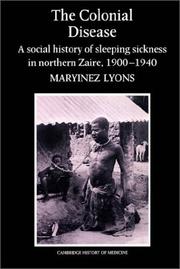
The colonial disease
Maryinez Lyons · 2002
איפה לקנות
המחיר באמזון משתנה מדי יום, אז הכי נכון לראות אותו שם ברגע הקנייה.
לצפייה באמזוןזה קישור שותפים: כשקונים דרכו, האתר מקבל עמלה קטנה בלי תוספת במחיר עבורכם, וזה עוזר לנו להביא תוכן איכותי ולתחזק את האתר. בתור שותפים של Amazon אנחנו מרוויחים מרכישות מתאימות.
על הספר
The Belgians commonly referred to their colonisation of the Congo as a 'civilising mission', and many regarded the introduction of Western biomedicine as a central feature of their 'gift' to Africans. By 1930, however, it was clear that some features of their 'civilising mission' were in fact closely connected to the poor health of many of the Congolese. The Europeans had indeed brought scientific enquiry and Western biomedicine; but they had also introduced a harsh, repressive political system which, coupled with a ruthlessly exploitative economic system, led to the introduction of new diseases while already-existing diseases were exacerbated and spread. Tropical, or 'colonial', medicine was a new field at the turn of the century, linked closely both to European expansionism and human trypanosomiasis, or sleeping sickness. In 1901 a devastating epidemic had erupted in Uganda, killing well over 250,000 people. Over the next decades other African colonies, including the Belgian Congo, experienced epidemic sleeping sickness. By the 1960s and independence, many Africans had come to regard sleeping sickness as the 'colonial disease' because of the truly draconian measures taken by some colonial administrations in their attempts to check the spread of the disease. Sleeping sickness captured the colonial imagination to such an extent that it continued to dominate medical attention for many years. As a consequence, other glaring public health needs of the Congolese were ignored over decades.
פרטי הספר
- שנה
- 2002
- שפה
- English
- הוצאה
- Cambridge University Press
- מהדורות
- 4
- עמודים
- 351
- ISBN
- 9780521524520
מקור הנתונים: Wikidata