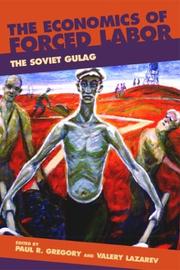
The economics of forced labor
Paul R. Gregory, V. V. Lazarev · 2003
על הספר
"The authors examine the various forms of coercion and the channels through which coerced labor was distributed from the late 1930s to Stalin's death in 1953 and reveal why the Gulag emerged and its perceived economic rationale. They detail the chronology of the Gulag from the first major projects - such as the White Sea - Baltic Canal and the Norilsk metallurgy complex - to later, unfinished plans. The book reveals how Soviet leadership desperately sought to find the right balance between coercion and material incentives for the labor force - and how material incentives played an increasingly greater role in later years. We also learn of the day-to-day costs of maintaining the Gulag and the great costs of coercion - lost productivity and rising criminality."--Jacket.
פרטי הספר
- שנה
- 2003
- שפה
- English
- הוצאה
- Hoover Institution Press
- מהדורות
- 5
- עמודים
- 212
- ISBN
- 9780817939427
מקור הנתונים: Wikidata
עוד של Paul R. Gregory