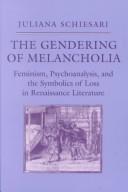
The gendering of melancholia
Juliana Schiesari · 2018
על הספר
The pantheon of renowned melancholics--from Shakespeare's Hamlet to Walter Benjamin--includes no women, an absence that in Juliana Schiesari's view pints less to a dearth of unhappy women in patriarchal culture than to the lack of significance accorded to women's grief. Through penetrating readings of texts from Aristotle to Kristeva, she illuminates the complex history of the symbolics of loss in Renaissance literature. Schiesari first considers the development of the concept of melancholia in the writings of Freud. Perceiving a gendered bias in his germinal essay "Mourning and Melancholia," she surveys recent responses by such theorists as Luce Irigaray, Kaja Silverman, and Julia Kristeva. After discussing texts from the tradition of humoral medicine, Schiesari provides fresh interpretations of works by Aristotle, Hildegard of Bingen, and Ficino. She then explores the significance of sorrow and loss in women's poetry of the Italian Renaissance, in key works by Tasso and Shakespeare, and in the writings of such theorists as Walter Benjamin and Jacques Lacan. according to Schiesari, male melancholia was celebrated during the Renaissance as a sign of inspired genius, at the same time a public rituals of mourning led by women were suppressed. While the grief of women is even today labeled "depression," she suggests that the disparaged practice of women's mourning may serve as the very groundwork for an alternative symbolism of female loss. The Gendering of Melancholia will be stimulating reading for scholars and students in the fields of feminist criticism, psychoanalytic and literary theory, and Renaissance studies, and for anyone interested in Western cultural history. -- Back cover.
פרטי הספר
- שנה
- 2018
- שפה
- English
- הוצאה
- Cornell University Press
- מהדורות
- 1
- עמודים
- 264
- ISBN
- 9781501718373
מקור הנתונים: Wikidata