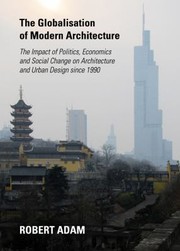
The Globalisation Of Modern Architecture The Impact Of Politics Economics And Social Change On Architecture And Urban Design Since 1990
Robert Adam · 2012
על הספר
Taking the break-up of the Soviet Union and the entry of Russia, China and India into the global market as the start of a new era of globalisation, Robert Adam compares new developments in architecture and urban design with major shifts in the balance of power since 1990. Based on the principle that design unavoidably follows social change, politics and economics, this analysis casts a new light on recent architecture. Starting with the lead up to events in the 1990s, links are established between the global dominance of the North Atlantic economies, architectural style and a dramatic increase in international architectural practice. The widely-observed homogeneity of the global consumer economy is examined in relation to branding, tourism and international competition between cities, and parallels are drawn with universal architectural and urban types, iconic architecture and the rise of the star architect. Contrasting pressures to maintain differences are identified in the break-up of nation states, identity politics, targeted marketing and environmentalism, and these are related to attempts to reinforce local identity through architecture and urban design. Using social, political and economic change as a guide to new directions in architecture and urban design, the book ends by tracing the changes in global power revealed by the 2008 Western financial crash and its immediate impact on the built environment. By comparing past patterns of cultural influence, the book speculates on how architecture and urban design may come to reflect wider global trends.
פרטי הספר
- שנה
- 2012
- שפה
- English
- הוצאה
- Cambridge Scholars Publishing
- מהדורות
- 1
- עמודים
- 338
- ISBN
- 9781443839051
מקור הנתונים: Wikidata
עוד של Robert Adam